


This post is also available in:  Français
Despite the exceptional measures introduced in 2014 (negative deposit rate,
subsidised loans for banks in the shape of TLTRO, purchases of covered bonds and
asset-backed securities), the ECB failed to raise medium-term inflation
expectations (see Chart 1). In the 12 months to December inflation fell to -0.2%,
thanks to the impact of oil-related deflation. Strong action was therefore
imperative to avoid a knock-on effect for wages and prices.

On 22 January, the ECB unveiled an asset purchase programme significantly
above expectations. Monthly purchases have been extended to include sovereign
securities reaching a level of €60 billion per month. But it is the length of the
ECB’s programme which is extremely ambitious: it is planned to last for at least
18 months (up until September 2016), representing a minimum of close to 11%
of GDP, and until such time as the ECB considers that inflation is credibly on track
to meet its 2% target. By outlining a dual constraint for the length of the
programme, based on both a set time period and other more vague criteria, Mario
Draghi has given himself a great deal of leeway on this issue. In addition, the ECB
will purchase sovereign bonds with maturities of up to 30 years, including those
with negative yields. At the same time, the interest rate on TLTRO loans for banks
has been reduced by 10 basis points.
The impact on sovereign debt markets should be colossal, provoking a new fall in
rates for all maturities, including peripheral debt (with the exception of Greece,
which is today excluded from the programme). We should see a new flattening of
sovereign yield curves across the board. However, falling rates are not a sure sign
of immediate victory for the ECB: one element in the fall in rates is a fall in longterm
inflation expectations, as shown by the reaction of the inflation swap
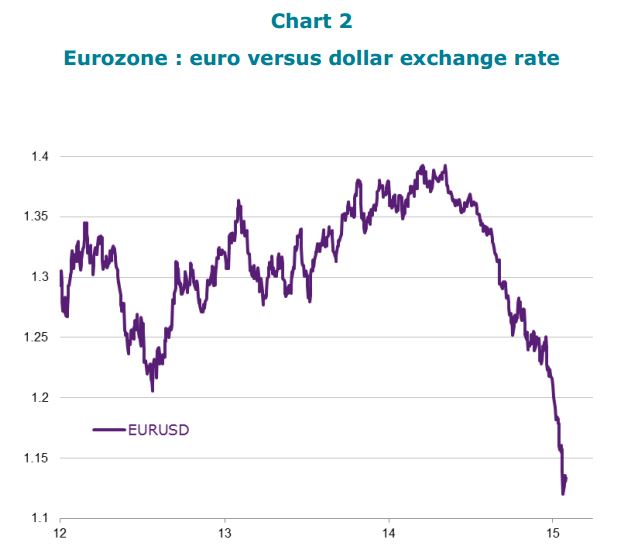
markets. The fall in expected inflation is consistent with a halt to euro
depreciation: the currency plummeted in value in anticipation of the 22 January
announcements (see Chart 2). So it is still too early to claim victory, but Mario
Draghi has nevertheless succeeded in gaining substantial leeway in the fight
against deflation, despite the reticence of some eurozone governments.

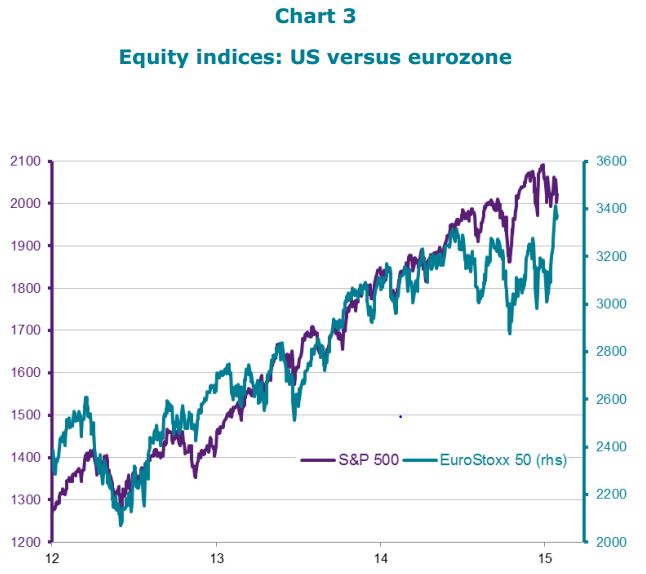
These ECB decisions provide comfort for our multi-asset portfolio positions: we
prefer bonds versus liquidity, and European equities versus the rest of the world.
Taking account of the potential for a pause in euro depreciation, we prefer to play
an overexposure to European equities via small caps rather than large caps, as
they will benefit from the fall in real rates and easier access to credit thanks to
the TLTRO.



Add Comment