


SWIFT RMB Tracker shows the euro is now the second-most-active
currency for trade finance, whilst the RMB slips to position number
three
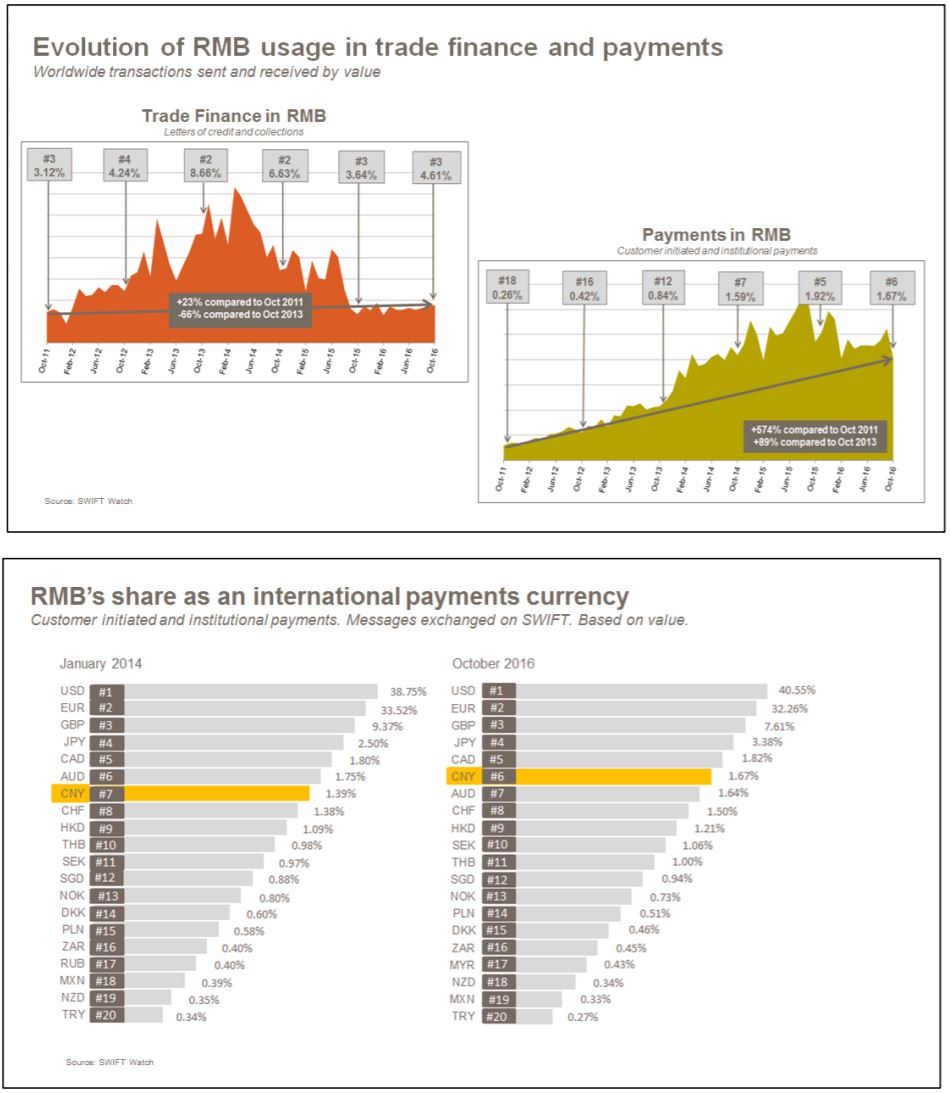
Since the launch of the first SWIFT RMB Tracker in November 2011, the RMB has shown stellar growth for payments, whilst RMB usage by value in traditional trade finance – letters of credit and collections – has been decreasing since 2014. The Chinese currency is now the third-most-active currency in trade finance, after the euro, with a share of 4.61%.
Three years ago, the RMB was ranked #2 in trade finance with a share of 8.66%. Since October
2013, the trade finance values in RMB have decreased by 66%, whilst trade finance across all
currencies decreased in value by 35%.
“The general slowdown of the Chinese and world economies over the past few years has impacted
global trade growth across all currencies, not just the RMB,” says Michael Moon, Head of Payments
Markets, Asia Pacific, SWIFT. “For example, commodities trade growth has been declining as
evidenced by the reduction of documentary trade. On a positive note, the inclusion of the RMB in the
Special Drawing Right (SDR)[[The SDR is an international reserve asset, created by the IMF in 1969 to supplement its member countries’ official
reserves. As of March 2016, 204.1 billion SDRs (equivalent to about $285 billion) had been created and allocated to
members. SDRs can be exchanged for freely usable currencies. The value of the SDR is based on a basket of five major
currencies—the U.S. dollar, euro, the Chinese renminbi (RMB), the Japanese yen, and pound sterling—as of October
1, 2016. Source: International Monetary Fund]] basket should generate further trust and confidence in the RMB
currency and support further RMB internationalisation.”
In terms of international payments, compared to September 2016, the RMB has dropped one
position to #6 in the currency rankings for international payments, with a share of 1.67%. This
month’s decrease is likely due to seasonal effects following the Golden Week holiday in China in
October. RMB payments value decreased by 22.44% compared to September 2016, whilst in
general all payments currencies decreased by only 5.96%.


Add Comment