


This post is also available in:  Français
Markets remained treacherous with multiple micro, macro and political movers. Trade concerns receded but
remain live as the U.S. tackles Chinese tech. Investors also weighted the implications of a U.S. withdrawal
from the Iran nuclear agreement. We expect the issue to hover at least until the summer and Iran to be initially
cautious in its response before considering a more radical path. Besides, investors kept on digesting (strong)
EPS reports, particularly sensitive to any guidance suggesting an earnings peak. Overall, investors are
increasingly pricing a growth stagnation with higher inflation, in the U.S. especially. As a result, cyclical assets
weakened, rates surged and boosted USD. This helped European and Japanese markets outperform.
CTAs and the U.S. long-biased managers were the most affected by current uncertainties. Merger funds also
took a hit from bond yields and several deals’ unfavorable developments. The other strategies were resilient.
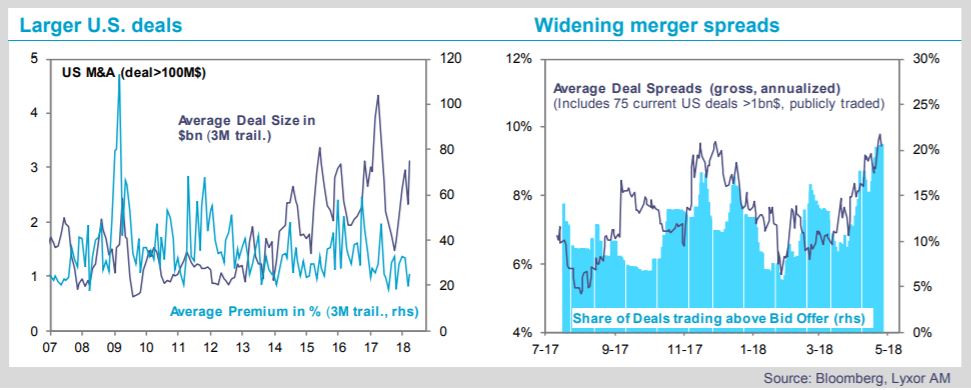
Since February, merger spreads widened meaningfully.
Rising bond yields, a key component of merger
returns, contributed to about half of the widening. A hike of 50bp in Libor implies about a 150bp widening in
annualized spreads. A second key factor was increased regulatory and deals’ duration uncertainty, in the
U.S. but also for operations related to China one way or the other. An obvious example was the NXP
Semiconductors / Qualcomm deal, under pressure from these factors and a key negative contributor for many
funds. Market volatility also played out, as well as the growing share of jumbo deals, usually more sensitive
to adverse developments. Amid very supportive conditions for M&A (from the tax reform in particular), weaker
deal rationales are also mentioned as a greater source of deal volatility.
These turbulences are not shaking managers’ faith, to the contrary. While they expect rising rates to translate
into structurally higher deal spreads going forward, they believe most of the downside is now priced, with
more appealing entry prices. Their high leverage reflects their confidence.


Add Comment