


This post is also available in:  Français
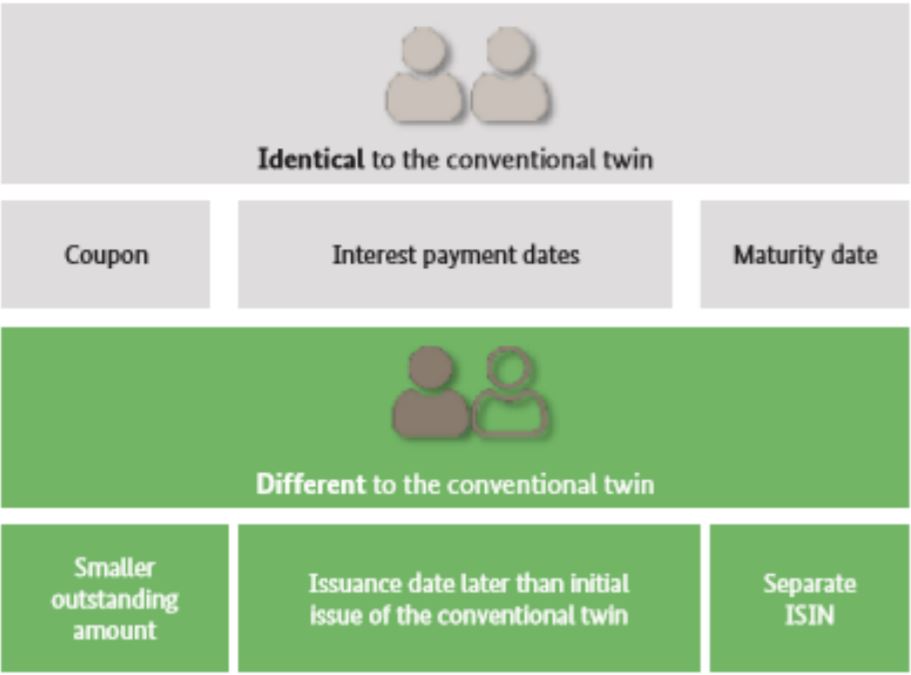
Germany is introducing a new concept of “Green Twin Bonds”, where a green bond is issued with the same maturity and
coupon as a conventional bond. The green bond is a separate bond with a smaller issue volume than the conventional
bond. The aim of this structure is to ensure that the issuance of green bonds does not negatively influence the overall
liquidity in German government bonds. It also makes it easier for there to be a natural diversification between
conventional and green bond investors.
Main terms of a green twin

“We strongly support the issuance of green German government bonds,” says Bram Bos, Lead Portfolio Manager Green
Bonds at NN Investment Partners. “The concept of “Green Twin Bonds” is a new and innovative form of green bond
issuance we favour. We think this concept is a much better option than the concept currently being explored by the
Danish government, which is looking to issue separate green labels or stickers which could be attached to any
conventional bond”
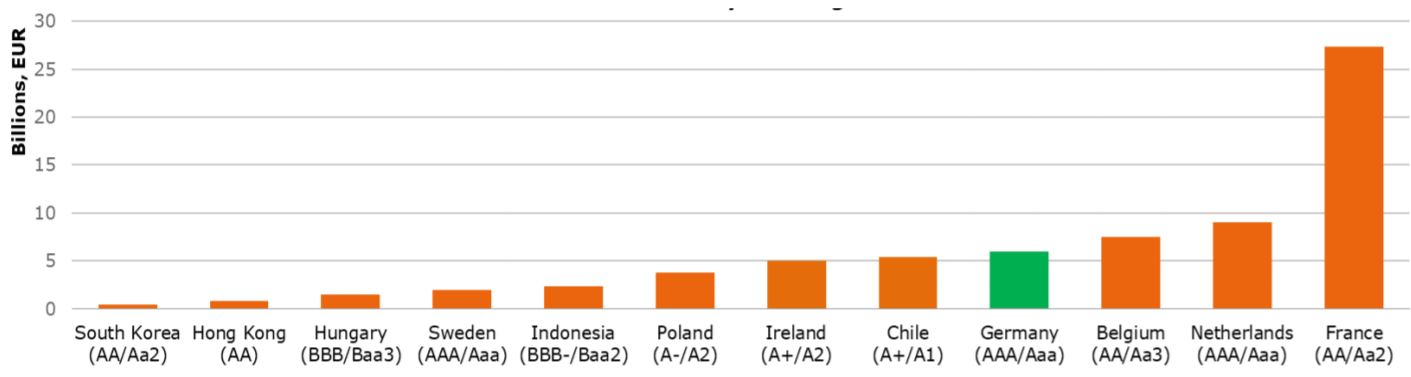
Germany is the third AAA-rated country to start issuing green government bonds, after the Netherlands in 2019 and
more recently Sweden on 1 September 2020.
Major green bond sovereign issuers[[Federal Republic of Nigeria, Republic of Fiji, Republic of Lithuania and Republic of Seychelles have also issued
green bonds, but the size was very small.]]

“We think this is an important milestone for the green bond market as the German government bond market is one of
the most important reference points in the capital markets,” continues Bos.
“Clearly the growth of the green bond
market keeps on accelerating and the strong increase in government issuance gives more investors the chance to
greenify their full fixed income portfolios”
Germany is committed to being almost climate neutral by 2050. In November 2016, the German federal government
adopted the Climate Action Plan 2050, making the country one of the first to submit its long-term greenhouse gas
emission strategy to the UN, as required under the Paris Agreement. This plan outlines the basic principles for
implementing the country’s climate change mitigation strategy to reach 80 to 95 percent reduction in greenhouse gas
emissions by 2050 compared to 1990 levels.
On 2 September, Germany issued EUR 6.5 billion worth of bonds with a maturity of 10 years. In contrast to some other
countries, like the Netherlands, Belgium and France, the German government plans to build a full yield curve. This gives
investors more options to greenify their fixed income portfolio at several different points along the yield curve. After this
inaugural green bond, Germany is expected to be a regular issuer, issuing around EUR 10 billion per year in green bonds.
Germany has identified five sectors to which they can allocate the proceeds of their green bonds. These are transport;
international cooperation; research, innovation and awareness raising; energy and industry; and agriculture, forestry,
natural landscapes and biodiversity.
“Although we think it is a positive development that Germany has started issuing green bonds, the country’s green bond
framework is not as clearly aligned with international standards like the Green Bond Principles and the EU and Climate
bond Initiative taxonomies as some other green government bonds” says Bos. “For example, a large portion of these
green bond proceeds will be allocated to trains and rail infrastructure, which could also include the freight transport of
fossil fuels. We miss the ‘do no harm’ assessment in this green bond framework, which is one of the pillars of the EU
taxonomy and EU Green Bond standard. However, we also see some positives and commend the German government’s
ambition to only allow green hydrogen production in the eligible use of proceeds. Green hydrogen is produced using only
renewable energy and the German renewables market is well placed to develop this exciting industry innovation and
make it cost competitive.”

Add Comment