


The British electorate’s decision to leave the European Union
in the June referendum has roiled markets worldwide. It has
clouded prospects for the UK and world economies, and threatens
the future of the European project. Investors are obviously right
to feel concerned. But they should also know that there are some
silver linings to the Brexit clouds. And these could support riskier
asset classes over the medium term.
The biggest worry is that the UK’s looming divorce from the EU will encourage
other electorates in Europe to demand their own ‘leave or remain’ referenda.
After all, populist, anti-EU movements are gaining strength in France, Italy,
Sweden and even Germany.
Yet there are reasons to believe that the EU’s key decision-makers, who are
clearly aware of popular discontent with mainstream politics, might see fit to
moderate some of the conditions that have heaped pain on the populations of
weaker member countries.
The European Commission has already turned a blind eye to fiscal slippage
in countries like Italy, Spain and France. So the UK referendum might yet
convince the German government to relent on some of its austerity demands
on peripheral countries. There could even be scope for officially-sanctioned
fiscal easing as a way of mitigating Brexit’s impact.
Italy’s creaking banking system is seen as another potential victim of Brexit,
but here too there are signs that policymakers are adopting a more pragmatic
approach. The Italian government is in talks with EU regulators in a bid to
overcome restrictions preventing a state-funded re-capitalisation of its debtladen
banks. Giving Rome the green light to press ahead with a EUR40billion
cash injection, invoking “special circmustances”, would go some way to
reversing recent market panic.
Spain’s general election result is also cause for mild optimism. The vote,
which followed soon after the British referendum and in which mainstream
political parties did much better than expected, suggests Brexit might well
make restive electorates a little less prone to rebellion.
As for the UK, while we expect Brexit to have a negative impact on growth,
possibly dragging the economy into a recession, the fallout could well prove less
severe than some think over the long run. For one thing, UK-EU negotiations
over a new trading relationship might not result in an acrimonious split.
Indeed, some commentators think Article 50, which lays
out the process that would ultimately lead to Britain’s
withdrawal from the EU, might never be invoked.
What’s more, a new UK government, expected to be
in place by September/October, could well provide
significant fiscal stimulus, say, by quickly approving
major infrastructure projects, or by implementing probusiness
policies (a cut in corporate tax rates, for example),
as a way of supporting the economy.
At the same time, major central banks are likely to offer
support where needed. The Bank of England has plenty
of ammunition at its disposal – it could cut rates or restart
Quantitative Easing, though sterling’s fall will also be very
stimulative for exporters. The European Central Bank,
meanwhile, could trim rates at the margin or announce
an extension of its asset purchase programme.
Most important of all will be the US Federal Reserve’s
response. Only recently there were expectations that the
Fed would hike its funds rate twice this year, by half a
percentage point in total. Now, the market is forecasting
no move until 2018. That may place a break on the
appreciation of the US dollar, which would help exportdependent
emerging markets.
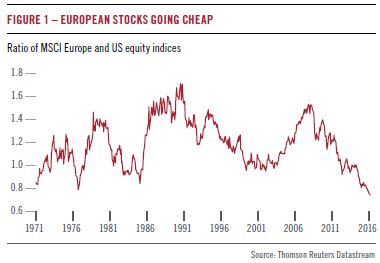
Even before their post-Brexit selloff, European equities
were at their cheapest valuations relative to the US since
at least the mid-1990s. They could rally strongly if there’s
a move back into riskier asset classes once the dust settles.
Clearly, Brexit is a reminder investors have to start paying
more attention to political risks. US elections this autumn,
French and German ones next year each have the capacity
to reignite market turmoil. But investors shouldn’t only
discount worst case outcomes.


Add Comment