


This post is also available in:  Français
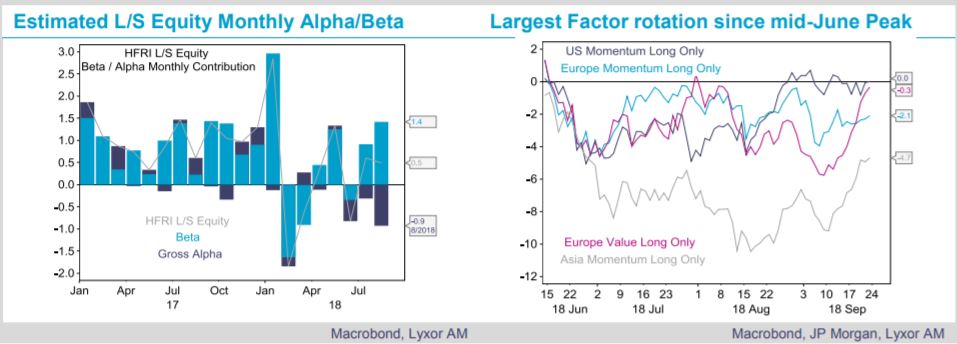
L/S Equity strategies were the primary culprits and victims. In the U.S., managers had steadily reduced their
overall net exposure and leverage since Q2. As a result, they partially missed the summer rally. The plunge
in Momentum in June was also costly, only partially recovering afterward. Stock selection in their heavyweight
tech, healthcare and cons. discretionary sectors didn’t help enough. In Europe, strategies adequately reduced
their overall exposures ahead of the summer.
Unfortunately, many strategies were too early in chasing Value
stocks, which continued to correct.
In Asia, strategies had also turned cautious before the summer. However,
they were caught in their long tech and Chinese positions, which strongly underperformed main markets.
Within the L/S Equity space, neutral strategies also suffered. In addition to the major swings in Momentum in
the U.S. and in Asia, and in Value in Europe, most other factors were volatile, which steadily eroded their
returns. Finally, many managers reported elevated hedging cost as one notable factor, amid declining
volatility in developed markets.
Meanwhile, the diversification from CTAs and Merger Arbitrage was of little help this time. Both strategies
were flat or so. CTAs navigated a lack of trends in most segments, to the notable exception of EM assets.
The tightening in deal spreads before the summer left limited leeway for Merger managers to extract
substantial returns. The positions in Special Situation portfolios did generate some alpha overall, but more
than offset by their costly long beta exposure. Fixed Income Arbitrage strategies remained isolated but
remained overall flat.
In our view, the difficult summer for hedge funds in general, and for L/S Equity, largely results from one central
cause: worldwide policy uncertainty.
The shifts in trade expectations, vulnerable progresses in Italy and UK,
the anti-establishment push in a number of DM and EM countries, the intensifying use of economic sanctions
all keep markets in feverish stance, with limited source of uncorrelated returns. It prevents managers from
deploying their strategy successfully. Some light might return before year-end.


Add Comment